Not all alternative energy sources (or systems) are the same. At first this might be obvious, solar is very different from wind, which are both very different from coal, nuclear, or oil sources of energy. But when people say alternative energies are better than coal or nuclear energy is this really true?
Often that statement is said with a specific implication that alternative energy is best. But listen to this. Alternative energy is anything that is not traditional, ie, coal, oil, or natural gas. Renewable energies are energy sources that (by their definition of being 'renewable') are materials that can be continually obtained from the Earth, ie, wood burning, biomass (corn, grass, etc). Finally there is sustainable energy. Sustainable energy comes from sources that are renewable, but also have no harm on the Earth or it's inhabitants.
Solar comes from the sun, which is captured by solar panels or some sort of solar collector. Wind technically comes from the sun's effect on our atmosphere, but blows and whips around the Earth without any human-made cause. Oceanic - let's take tides, will always push back and forth without any aid from anything beyond the moon's pull. Geothermal is natural ambient heat found in the Earth's crust.
All the sources in the above paragraph are sustainable, renewable and alternative.
Renewable energies are only renewable and alternative.
And alternative? That's anything that's not traditional (coal, oil, gas).
Nuclear power is one that can be 'iffy to sort. It's not traditional, but isn't fully renewable, yet is obviously not sustainable. (Haven't you heard of all the nuclear waste resulted from those power plants?)
Hopefully it is clearer now that not all alternative energy is considered sustainable. Tomorrow I will post a graph that visually demonstrates what I've explained here.
Tuesday, September 25, 2012

Monday, September 24, 2012
Where is Energy Coming From?
What energy sources did you come up with that best fits your living location?
Then the fourth overall category of oceanic/hydro/water should be obvious - the oceans and large natural lakes, like the Great Lakes around Michigan and Canada.
Did these maps affirm or change your mind about what energies are best in your area?
 | |||
| See? Not everywhere is best for solar |
 |
| Notice where wind might work better? |
 |
| Detail of the US for geothermal, showing just how varied sources can be within a single area |
Did these maps affirm or change your mind about what energies are best in your area?
Friday, September 21, 2012
Something to Think About: Alternative Energies
Not every country, state/providence, county, city, town, village, or home has an equal opportunity for different energy sources. Some areas of the world are obviously more inclined towards solar energy, whereas others might be attracted to others such as wind, geo-thermal/earth, and ocean/water energy.
Know one knows the weather in a local area better than the locals themselves. For example, as I have lived in the 'palm' Michigan for all my life I know that it will rain at least 65% of the fall season, snow can vary but can start as early as Halloween and go past Easter. I have no idea what weather is like in the Thumb/Bay City area, Upper Peninsula, or in Michigan's neighboring states of Wisconsin, Ohio, Indiana and Illinois.
So this weekend think about the sort of weather you experience where you live. In the four main over-arching categories of wind, water, earth, and solar what would fit best? And yes, more than one can be applied.
Know one knows the weather in a local area better than the locals themselves. For example, as I have lived in the 'palm' Michigan for all my life I know that it will rain at least 65% of the fall season, snow can vary but can start as early as Halloween and go past Easter. I have no idea what weather is like in the Thumb/Bay City area, Upper Peninsula, or in Michigan's neighboring states of Wisconsin, Ohio, Indiana and Illinois.
So this weekend think about the sort of weather you experience where you live. In the four main over-arching categories of wind, water, earth, and solar what would fit best? And yes, more than one can be applied.
 |
| So many choices! |
Thursday, September 20, 2012
Current Topic Thursday: Wind Turbines in MI
Have you ever been driving along on the highway, driving a respectable 70 mph on cruise control of course, when you see one of those HUGE LOAD truck/semi/ carriers in front of you just as you've finished merging from one highway to the next? The thought that crosses your mind is "Darn it! This ruins my cruise control and gas mileage!" Okay, so maybe not everyone is concerned about their highway gas mileage, but having to adjust your speed from cruise to slow for a large truck is always a drag.
But what if you noticed that barge was carrying a blade for a wind turbine?
Have you ever seen one? They are HUGE! I've studied wind turbines, seen plenty of pictures, and thought about how neat it would be to climb to the top of one. Never had I seen one in person, however. Until then.
And that's just a single blade. Imagine how huge the whole turbine will be once it is assembled!
Turns out Michigan is installing many of these energy creating beauties. If a TV commercial is to be believed, all the parts can and are made here in Michigan. I don't see why that wouldn't be true. Michigan is where automobiles were first mass-produced, so why not move with the times and convert all that empty manufacturing space to develop wind turbines?
Check out an article here:
http://www.huffingtonpost.com/2012/06/05/dte-energy-wind-turbines-huron-sanilac_n_1570985.html
But what if you noticed that barge was carrying a blade for a wind turbine?
Have you ever seen one? They are HUGE! I've studied wind turbines, seen plenty of pictures, and thought about how neat it would be to climb to the top of one. Never had I seen one in person, however. Until then.
 |
| See? They're HUGE! |
Turns out Michigan is installing many of these energy creating beauties. If a TV commercial is to be believed, all the parts can and are made here in Michigan. I don't see why that wouldn't be true. Michigan is where automobiles were first mass-produced, so why not move with the times and convert all that empty manufacturing space to develop wind turbines?
Check out an article here:
http://www.huffingtonpost.com/2012/06/05/dte-energy-wind-turbines-huron-sanilac_n_1570985.html
Wednesday, September 19, 2012
American vs Local
A huge topic that gets bounced around in the new media outlits is thus: (at least, in my home country of the United States of America)
But then we are told in the same lines, generally perhaps even in the same article, that we should buy local. Why?
BUY AMERICAN! CAUSE AMERICAN IS BETTER THAN ANYTHING ELSE!
 |
| 'MERICA! |
BUY LOCAL! CAUSE LOCAL IS BETTER THAN ANYTHING ELSE!!
 |
| LOCAL! |
Here we are given two seemingly similar topics that might seem parallel (ie, the same). Buy things that are near you (in my case, from America) which is buying locally which is awesome for the economy and local businesses. They are not. Let me explain.
For example.
You are dying to own a sweet awesome super-legit solid oak chair. It would look perfect in your living room, you just know it. So you start shopping online and find two chairs that fit what you are looking for perfectly.
 |
| Oh my gosh it's perfect! |
One is crafted and shipped from Toledo, Canada and the other Houston, Texas. You now live in Michigan. What woodsmen and distributor do you choose? If you want to buy American, you choose the one from Houston. But if you want to buy local which do you choose? Toledo.
But wait, that's not American! No. No it's not. But it's local. Local in terms of being in close proximity to the community you live in. Local as in the money going to Toledo has a better chance of coming back to your community thorough Canada/Michigan trade relationships than purchasing from Houston.
Mind-boggling, isn't it? Country made isn't the same as local made. Buying local means buying within a radius that evolves around your community, not just because there is a MADE IN AMERICA sticker on it. If you were to buy from Houston you might not be paying anymore online than from Toledo, but think back to yesterday's post about full cost accounting. What sorts of fees are you not paying that would incur were you to buy from Texas over Canada?
Think about it.
Buy local.
Tuesday, September 18, 2012
Full Cost Accounting
There is the idea in sustainable business called full cost accounting. This idea encourages and requires the complete notation and inclusion of all costs created within a process. This process can include services, product manufacturing, energy sources (like gas), food gathering etc.
Gasoline prices are the easiest idea to apply full cost accounting with, as most everyone has at least once had to pay at the pump. The numbers I put into this post are not legit numbers, but a generalization to get the point across.
Okay, so gas right now is $4.10 a gallon. That's a lot, as over the weeks and months the price keeps going up and people shout about the unfairness of it all.
But what is that $4.10 covering? The cost of the actual liquid being pumped into your car, some taxes, and some other odds and ends, like the bit the gas store gets for giving the product and service of gasoline.
What's not covered?
The cost to transport the gas to the station.
The cost of refining the oil to gas.
The cost of transporting the oil to the refineries.
The cost of the drill equipment.
The trucks themselves.
The stations.
The employees working at the stations.
The oil spills and effects on the natural world.
I could keep going, but you get the idea. Some sources put the true cost of gas at $15 dollars. I'll be nice and give you a link to read (and watch a video) early this week. It was published February of 2012, so is decently current.
http://www.treehugger.com/fossil-fuels/true-cost-gasoline-closer-15-gallon-video.html
If we had full cost accounting applied to our gas we would be paying that $15+ dollars a gallon without any problem.
Gasoline prices are the easiest idea to apply full cost accounting with, as most everyone has at least once had to pay at the pump. The numbers I put into this post are not legit numbers, but a generalization to get the point across.
Okay, so gas right now is $4.10 a gallon. That's a lot, as over the weeks and months the price keeps going up and people shout about the unfairness of it all.
 |
| "Are you kidding? Back in my day gas was just a dime!" |
But what is that $4.10 covering? The cost of the actual liquid being pumped into your car, some taxes, and some other odds and ends, like the bit the gas store gets for giving the product and service of gasoline.
What's not covered?
The cost to transport the gas to the station.
The cost of refining the oil to gas.
The cost of transporting the oil to the refineries.
The cost of the drill equipment.
The trucks themselves.
The stations.
The employees working at the stations.
The oil spills and effects on the natural world.
I could keep going, but you get the idea. Some sources put the true cost of gas at $15 dollars. I'll be nice and give you a link to read (and watch a video) early this week. It was published February of 2012, so is decently current.
http://www.treehugger.com/fossil-fuels/true-cost-gasoline-closer-15-gallon-video.html
If we had full cost accounting applied to our gas we would be paying that $15+ dollars a gallon without any problem.
Monday, September 17, 2012
Magic of the Cherry Tree
If there is one topic, phrase, and/or big idea that sums up the idea of how we sustainable business students from Aquinas College think about how something should effect others it is the idea of the cherry tree.
Why the cherry tree? Well, lets break it down, shall we?
The tree has only benefits to offer. There are no negatives to a tree living it's life as a tree. Let a tree do it's tree-things and magic happens.
The tree overall is a home to many creatures, from small mammals and birds to insects and microorganisms. Shade is created to protect the more vulnerable plant life that tends to grow on the ground level (like grasses, flowers, and small shrubs) a food is produced (the cherries) that feeds an entire community, gives back oxygen as its only 'waste' and releases no negatives to its near and far communities.
What's not to love about the cherry tree?
The idea of waste equaling food is prominent in the cherry tree. Nothing negative occurs, only positives. Food for the community, shelter, protection
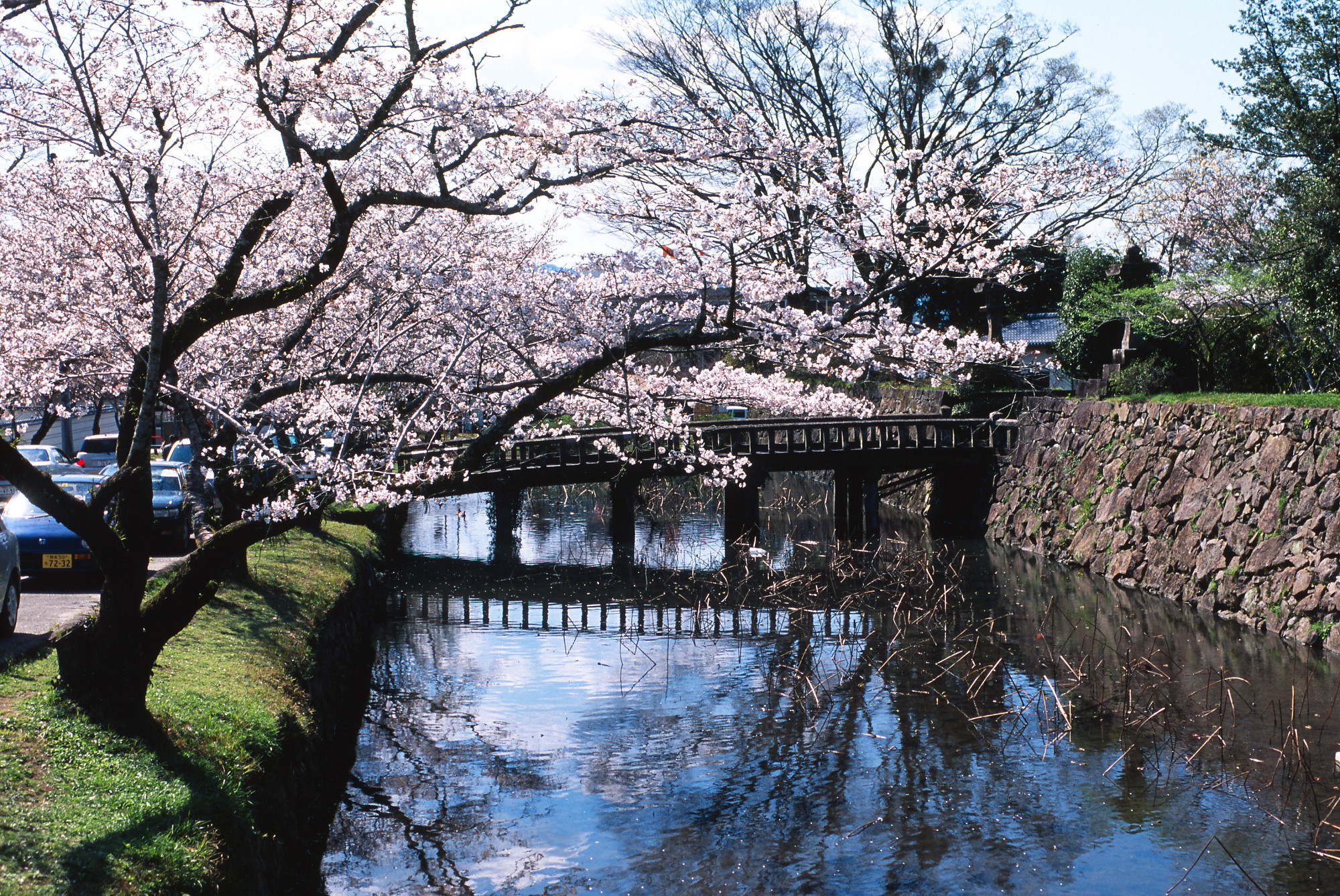 |
| It's so pretty I'm tearing up |
The tree has only benefits to offer. There are no negatives to a tree living it's life as a tree. Let a tree do it's tree-things and magic happens.
The tree overall is a home to many creatures, from small mammals and birds to insects and microorganisms. Shade is created to protect the more vulnerable plant life that tends to grow on the ground level (like grasses, flowers, and small shrubs) a food is produced (the cherries) that feeds an entire community, gives back oxygen as its only 'waste' and releases no negatives to its near and far communities.
What's not to love about the cherry tree?
The idea of waste equaling food is prominent in the cherry tree. Nothing negative occurs, only positives. Food for the community, shelter, protection
Subscribe to:
Posts (Atom)